He Just Won the Fields Medal. His Student Rating Is 2.4 out of 5
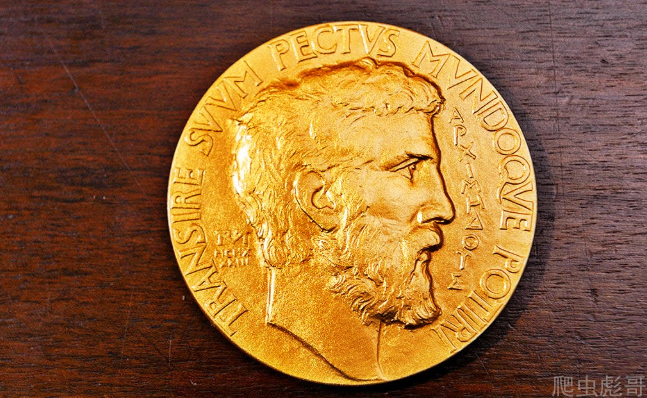
He Just Won the Fields Medal. His Student Rating Is 2.4 out of 5
On July 23, 2026, the International Congress of Mathematicians opened in Philadelphia. That day, the Fields Medal, math’s highest honor awarded once every four years, was announced.
Four people received the medal. Two of them were Chinese.
The last time a Chinese mathematician stood on that stage was Shing-Tung Yau in 1982. Forty-four years later, there were two at once.
One was Deng Yu, a University of Chicago professor born in 1989 in Kaifeng, Henan. He was recognized for rigorously deriving the Boltzmann equation from microscopic molecular collisions, and in the process addressing Hilbert’s Sixth Problem, first posed in 1900.
The other was Hong Wang, a 35-year-old professor at NYU’s Courant Institute. She was recognized for proving the Kakeya conjecture in three dimensions, a problem that had challenged mathematicians for more than half a century. She also became only the third woman in the 90-year history of the prize.
The Fields Medal is often called the Nobel Prize of mathematics. For two days, these names were everywhere, glowing across headlines around the world.
But that is not the part I want to write about.
I want to start from a very small corner of the internet: a student rating website.
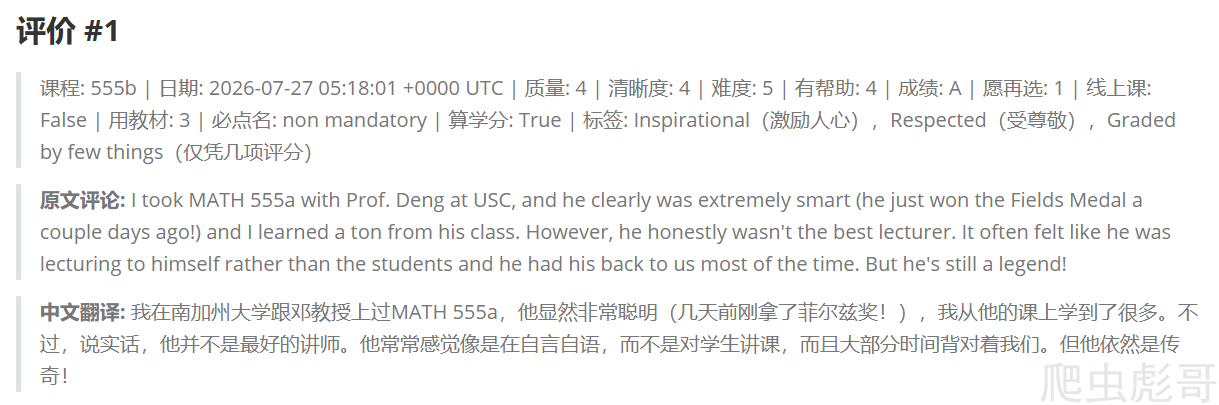
On July 27, 2026, four days after the medal ceremony, a student posted a review of Deng Yu. The comment began with praise: he is obviously brilliant and had just won the Fields Medal. Then it turned:
“Honestly, he is not the best lecturer. It often feels like he is talking to himself rather than teaching students, and most of the time he faces away from us.”
The review ended with one more line:
“But he is still a legend.”
That review gave him 4 for quality, 5 for difficulty, and tagged him as inspirational.
His overall score on that site: 2.4 out of 5.
Average difficulty: 4.1.
Math’s highest honor and a 2.4 teaching score sat on the same profile page, separated by just a few lines.
Between those lines: eleven years.
First, some context on the site.
RateMyProfessors is one of the most-used course-selection tools for college students in North America. Think of it as Yelp for professors. Millions of reviews. Multiple dimensions: quality, clarity, difficulty, helpfulness, and whether students would take the class again. A 2.4 score usually puts a professor on students’ “avoid” list.
Now compare that with the Fields Medal. It is awarded once every four years, to at most four people each time, and recipients must be under 40. Since there is no Nobel Prize category for mathematics, this became the field’s own highest distinction. The bar is so high that from 1936 to now, fewer than 70 people have ever received it.
Then I noticed something fascinating.
This year’s two Chinese winners, Deng Yu and Hong Wang, both taught at NYU. Both have profiles on RateMyProfessors. Their scores differ by nearly a factor of two.
Let’s start with Deng Yu.
He comes from the elite competition track. He won honors in the Putnam Competition, arguably the hardest undergraduate math competition in the U.S. On paper, someone with that resume should be an effortless lecturer.
But his RateMyProfessors history tells a different story.
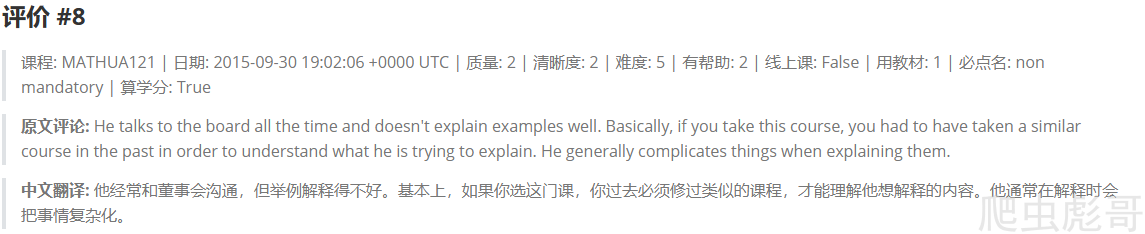
The earliest review I found was from September 2015 for MATH-UA 121 at NYU. Quality score: 2.
The student wrote that he often talked toward the blackboard, gave unclear examples, and was very hard to follow if you had not taken similar classes before. They also said he tended to make simple things feel complicated.

December 2015, same course. Score: 1.
The entire comment was basically: if you see his name in the course listing, do not take it.

January 2016, right after the semester ended. Score: 1.
“Worst class I’ve ever taken. I could barely read his handwriting and could hardly hear what he said.”
Then came a sentence I could not stop thinking about:
“My grades improved after I stopped going to class.”
Read that again.
A student chose not to attend lectures in order to protect their grade. For most students, that is about as desperate as a review can get.
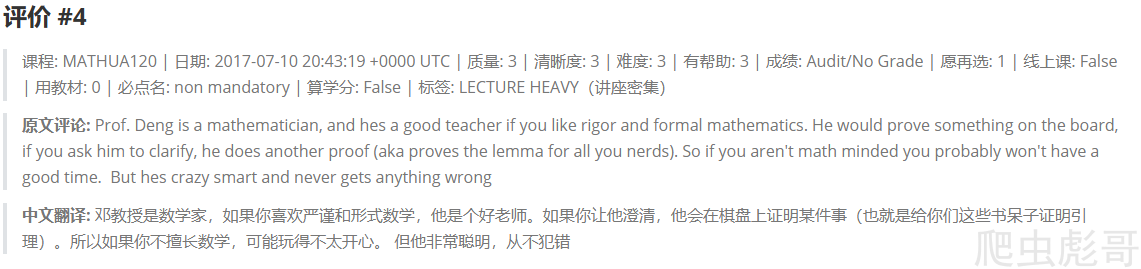
In 2017, for MATH-UA 120, he got a 3.
This review included a vivid detail: if you asked a question, he would not explain it in plain language; he would re-prove the lemma on the spot. Great for math nerds, not so great if you lacked that background. But the student also wrote that he was unbelievably smart and almost never wrong.

In 2019, MATH-UA 425A, score: 1.
That student wrote something true at almost any university in the world: knowing a subject and teaching a subject are two different skills. They said they had never seen Deng Yu put real effort into building beginner intuition for concepts students typically struggle with.
By then his profile had basically settled into a pattern: worrying teaching performance, off-the-charts intellectual ability. If you visited the page in 2019, you would likely conclude he was a brilliant scholar and a poor lecturer.
But the story did not end there.

In November 2024, at USC, for MATH 555, he received a 5.
Tag: Amazing lectures.
Comment: “Very good.”
Interesting, right?
The same person who got mostly 1s and 2s while teaching undergraduate math at NYU gets a 5 ten years later teaching a graduate course at USC.
I do not have hard evidence, so I will not over-claim. But those two clusters of numbers suggest a possibility: students already operating at his level, or near it, may find him excellent. Most others may be left behind before the race even begins.
In class, he faces the board. He speaks formulas. He sees formulas. He is talking to the mathematics on the board, and almost forgetting there are dozens of human beings behind him.
Is that what genius looks like?
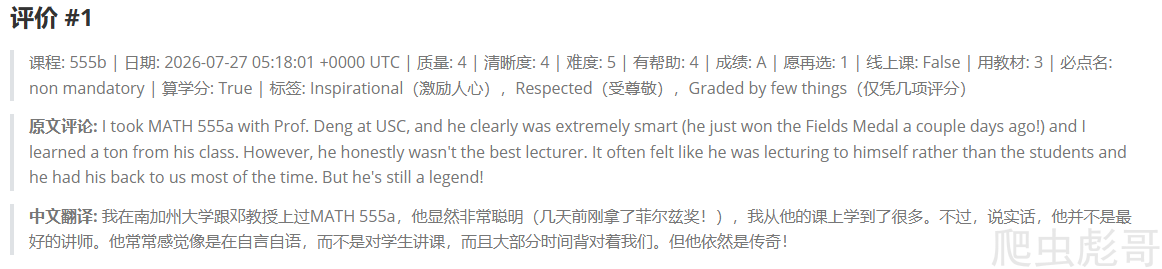
Then came that July 27, 2026 review, four days after he won the Fields Medal. The former student gave quality 4, difficulty 5, praised his brilliance, noted he had just won the medal, and still added the same critique: often self-talking, often turned away from students. But still a legend.
Eleven years.
From “do not take him” to “still a legend.”
Student cohorts changed again and again, yet their core assessment stayed surprisingly consistent: yes, he is brilliant; yes, his class is hard to follow.
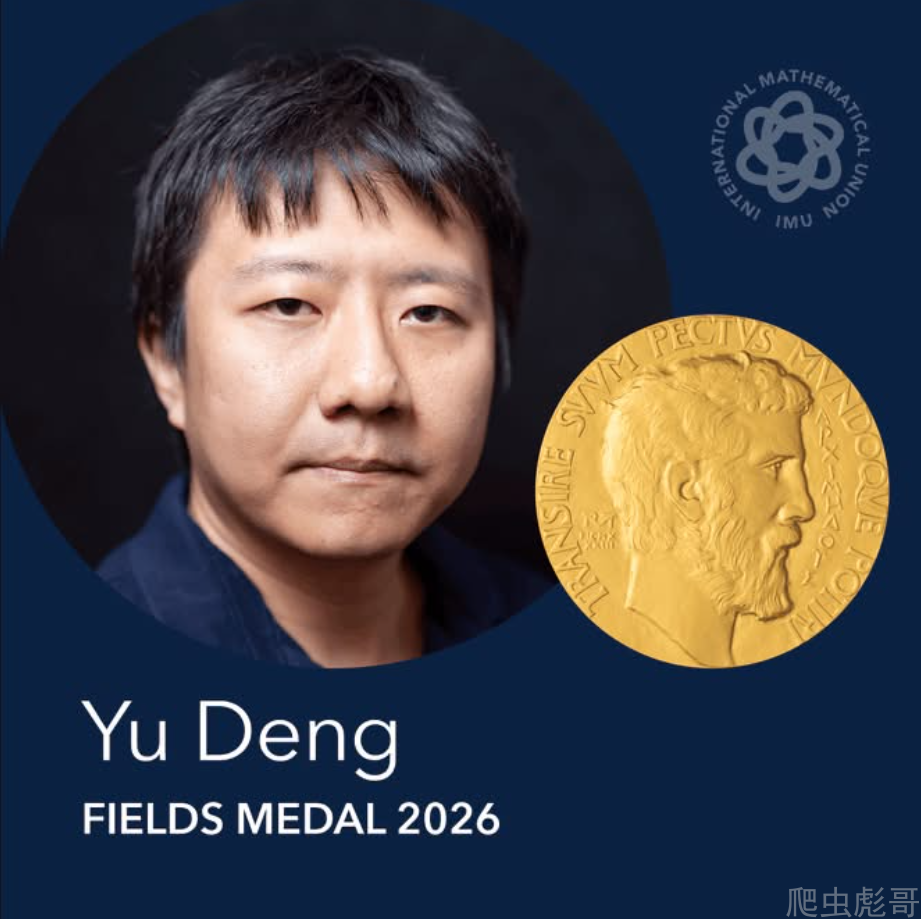
Now let’s talk about Hong Wang.
Her overall score is 4.3, which is strong in RateMyProfessors terms. But if you read the comments, the pattern is strangely parallel to Deng Yu’s: very smart, very hard.

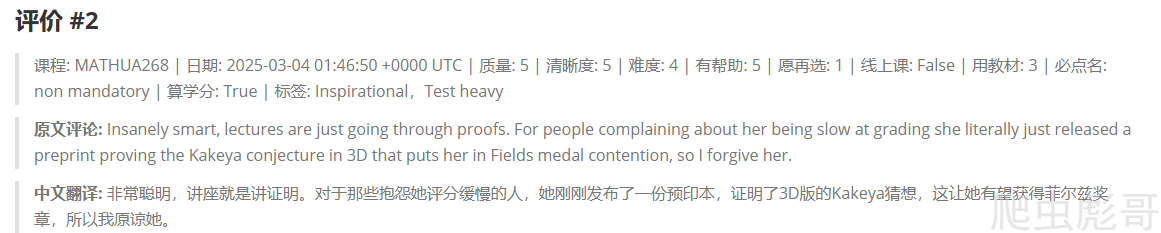
December 2024, MATH-UA 268, score: 5.
“She’s very smart and I learned a lot, but the exams are frequent and difficult.”

February 2025, score: 3.
“Nice person, but insanely hard exams, and grading was very slow. The next semester started and my final grade still wasn’t out.”
Notice the timing.
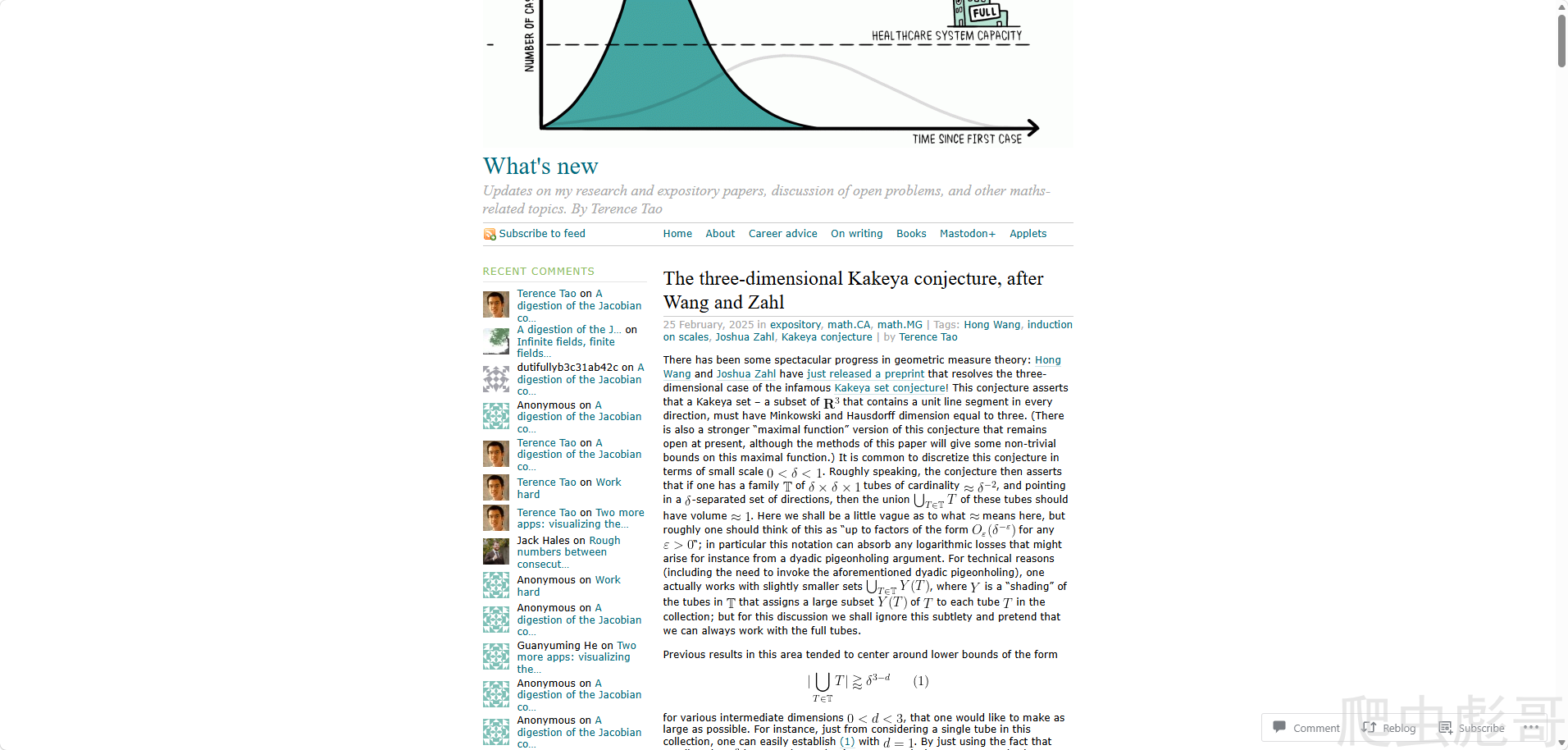
In that same week of student complaints, on February 24, 2025, Hong Wang and Joshua Zahl at the University of British Columbia posted a 127-page paper on arXiv. Its core claim: they proved the Kakeya conjecture in three dimensions.
Then something remarkable happened.
In March 2025, one month later, someone added another comment: she had just released a preprint proving the 3D Kakeya conjecture, which put her in Fields Medal contention, so “I forgive her.”
I forgive her.
Hard exams, slow grading, forgiven.
Because that student knew the woman at the front of the classroom had just untied a knot the math world had wrestled with for over fifty years.

Later, on July 18, 2026, five days before the ceremony, someone gave her another 5 and used one tag only:
GOAT.
Casual internet slang, highest possible respect.

At this point, the Kakeya conjecture deserves a plain-language explanation.
In 1917, Japanese mathematician Soichi Kakeya asked a deceptively simple question: if you have a needle of fixed length in a plane, and you rotate it through every possible direction, how small can the area it sweeps out be?
It sounds like a puzzle question. And the two-dimensional answer is indeed counterintuitive: the area can be made arbitrarily small.
But as mathematicians dug deeper, this toy-looking problem turned out to connect to profound structures. It evolved into a conjecture: the set containing a unit segment in every direction must have full dimension.
The 2D case was solved in 1971.
The 3D case stayed open from 1971 to 2025. For more than half a century, many of the smartest people in the world got stuck at dimension 2.5. From 2.5 to 3 was the final step no one could close. Terence Tao, often called one of the greatest living mathematicians, wrote major guidance for this area and still could not finish it.
Then Wang and Zahl did.
With that 127-page proof, they covered the final distance.
After reading it, Tao wrote on his blog: “spectacular progress” in geometric measure theory. Rice University mathematician Nets Katz went even further, calling it a once-in-a-century result. Quanta Magazine later ran a feature and used exactly that framing.
A professor criticized for hard exams and slow grading, and a mathematician who solved a century-level problem, are the same person.
That contrast reminds me of the hidden ruler inside student reviews.
Students evaluate professors by classroom experience: Did I understand this lecture? How long did grading take?
The world evaluates mathematicians by a different ruler: Did they move the frontier of human knowledge?
Same person. Different ruler. Totally different result.
So the real question is: why?
Why do people at the peak of human intelligence often struggle to teach introductory courses?
That student quote says it perfectly: knowing a subject and teaching a subject are not the same thing.
I have always felt that the hardest part of teaching is seeing where the other person is standing.
It is not enough to know how to get from A to B. You also need to know where a first-time learner gets lost, where they freeze, where they trip. You must lower your own thinking back to the learner’s starting point, then climb with them one step at a time.
For ordinary people, that is hard because they may not know enough.
For geniuses, it can be hard for a different reason: they may no longer remember how they climbed.
Genius thinking often jumps.
You watch someone leap from assumptions to conclusion. The giant gap in the middle simply does not exist in their mind. Not because they are hiding it. Because they crossed that gap twenty years ago, and over time the gap got paved over in memory.
Like riding a bike: once you can ride, it is hard to recall exactly how you crashed when learning.
It is not always that they refuse to teach.
Sometimes they genuinely cannot see the gap is still there.
When Deng Yu appears to talk to the board, that is not necessarily arrogance. He may not realize people in the room need him to slow down. When you ask where you got lost, he re-proves the statement. In his world, that is maximum kindness, because proof is the clearest explanation he knows.
He thinks he is speaking plainly.
But he is speaking another language.
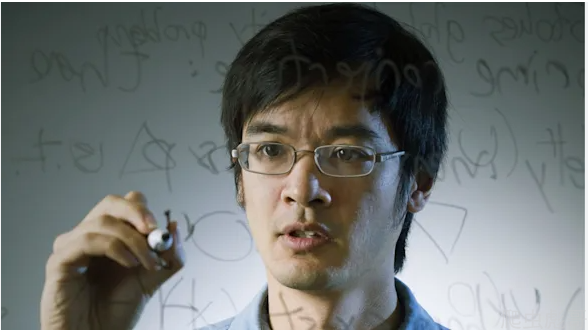
This reminds me of a professor I had in college.
He taught a core major class and had unquestionable academic depth. Gray hair, serious face. He stood at the podium and immediately began talking to the board. His writing followed its own internal logic, dense from top-left to bottom-right. Then he knocked twice on the board and asked, “Got it?”
No one spoke.
He took silence as understanding and kept going.
By the end of class, our notes matched the board line by line, but few of us actually understood. I told my roommate afterward that self-study might be better.
Later, it proved true.
Here is the irony.
Are the students giving Deng Yu 2.4 using the same standard as the Fields Medal committee?
No.
Rating sites measure: did you make this semester understandable and survivable for me?
The Fields Medal measures: how far did you push the boundary of human knowledge?
Those standards are almost unrelated.
Yet they are attached to the same name, forming one biography.
From a student’s perspective, the low score can be completely fair. That semester is real time lost; they may have to teach themselves anyway.
From the perspective of mathematical history, a one-star review can look absurd. The class was taught by someone who would later shift the boundary of what humanity can understand.
I am not taking sides.
I just think placing these two evaluation systems together creates a powerful metaphor for our era.
We evaluate people using the ruler in our own hands.
And that ruler measures mostly where we ourselves are standing.
How far you can see depends on where you stand.
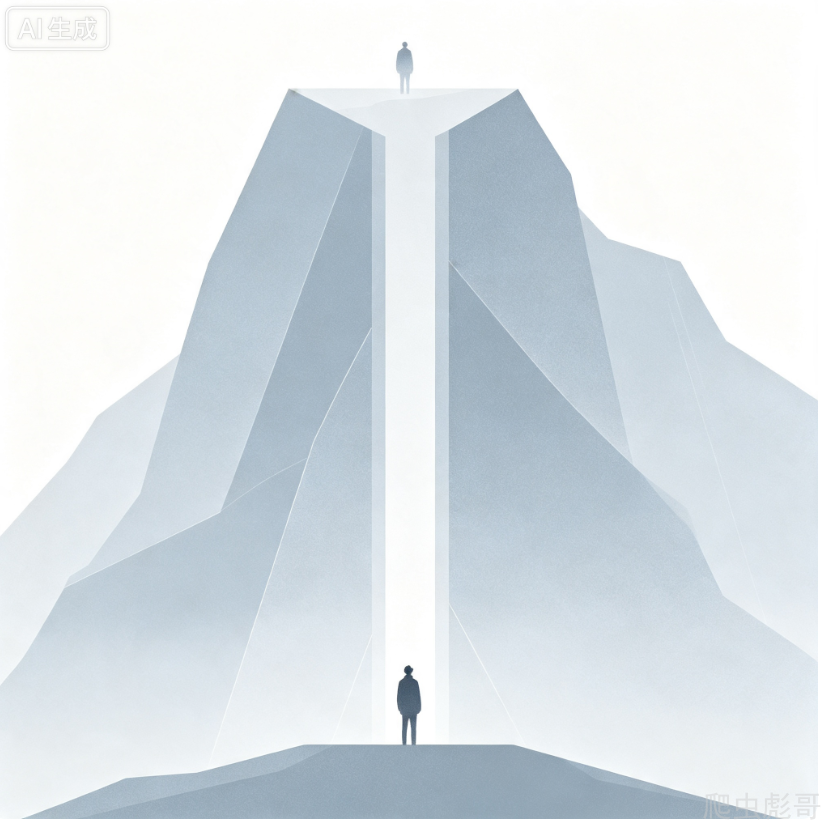
For Deng Yu at the summit of abstract thought, looking down, everything may look like landscape and continuity.
For the student at the foot of the mountain, looking up, everything may look like cliffs.
Both are telling the truth.
There is just a mountain between them.
Back to that website.
On July 27, 2026, that American student probably did not realize they were documenting history in real time. They knew he had won the medal, and still insisted on writing: his teaching is average.
Eleven years.
The record on that site feels like an honest, almost cruel thermometer, tracking the temperature gap between genius and ordinary understanding.
Some people’s light is visible from the mountaintop.
Some people’s light is visible in the classroom.
Those two kinds of light rarely shine at full intensity in one person.
In a way, 2.4 and 4.3 are not just ratings.
They are a measured distance between human intelligence and human comprehension.
Maybe the next time I write an article I think is brilliant, I should ask one question first:
Where are the people who cannot follow this standing right now?
That student at the beginning said, “He is still a legend.”
I believe that.
But I still wonder whether someone who has lived on the summit too long might open their own rating page late at night, see 2.4, and pause for a second.
Then turn around and continue solving another problem that almost nobody can understand.
People on the summit may not see this.
That is okay.
We can.

Thanks for reading this far. If you found it meaningful, feel free to like and share it.
If you want to catch future posts first, you can also follow and star this blog.
See you in the next one.